
For decades, His Holiness the 14th Dalai Lama has been unwavering in his message that humankind must find peaceful solutions to conflict and look after the earth’s environment for future generations.
Support for global peace
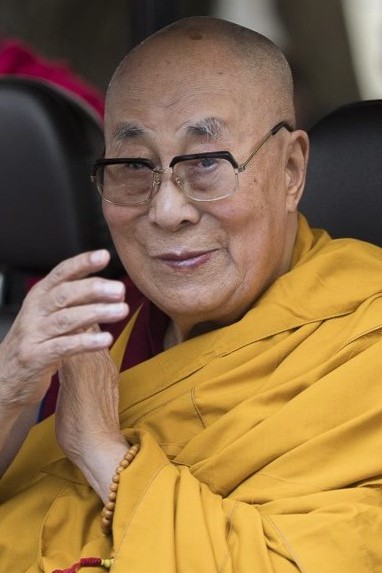
Earlier this year, His Holiness expressed his wholehearted support for Pope Leo XIV’s Palm Sunday appeal for peace: ‘I wholeheartedly endorse the powerful appeal for peace made by the Holy Father, Pope Leo. His call for the laying down of arms and the renunciation of violence resonated profoundly with me, as it speaks to the very essence of what all major religions teach. … History has shown us time and again that violence only begets more violence and is never a lasting foundation for peace.
‘An enduring resolution to conflict, including the ones we see in the Middle East or between Russia and Ukraine, must be rooted in dialogue, diplomacy and mutual respect — approached with the understanding that, at the deepest level, we are all brothers and sisters.’
His Holiness has previously reflected on the large-scale violence of the 20th century – it has been estimated that the century saw more than 200 million people killed in conflicts — and that it would be easy to feel a sense of hopelessness and despair. But he has said: ‘When I see conflict in the world, my courage and wish to help others increases. It helps not to be depressed but to cultivate inner strength and loosen the grip of self-centredness.’
The need for protection of the environment
In his book In Praise of Great Compassion – The Wisdom Experience His Holiness commented on the classic Buddhist text, Seven-Point Mind Training, which describes the degeneration of the environment and those who live in it:
‘The degeneration of both [our environment and the sentient beings who live in it] is obvious: corruption, war, disharmony, and dispute are rampant between groups and nations and within them as well. Our environment is adversely affected by climate change, which will bring additional hardships to the sentient beings on planet Earth. In confronting this, we have four choices. The first is to hope it will go away and ignore it, which will only allow it to increase. The second is to become paranoid and aggressive, to yell and scream, and to accuse and threaten others, which only inflames a bad situation. The third is to despair and become depressed, which brings everyone down. The fourth is to get involved and try to help. Needless to say, this is the course we should choose. But it is important to maintain the proper mental attitude when doing so and to accept that our efforts may or may not produce the changes we seek. At the end, we are left with the state of our mind.’ (p 311).

Individual and universal action
Speaking about our responsibility to future generations, His Holiness has said: ‘If we unbalance nature, humankind will suffer. Furthermore, as people alive today, we must consider future generations: a clean environment is a human right like any other. It is therefore part of our responsibility towards others to ensure that the world we pass on is as healthy, if not healthier, than when we found it. … although there is a limit to what we as individuals can do, there is no limit to what a universal response might achieve. It is up to us as individuals to do what we can, however little that may be. Just because switching off the light when leaving the room seems inconsequential, it does not mean that we should not do it.’
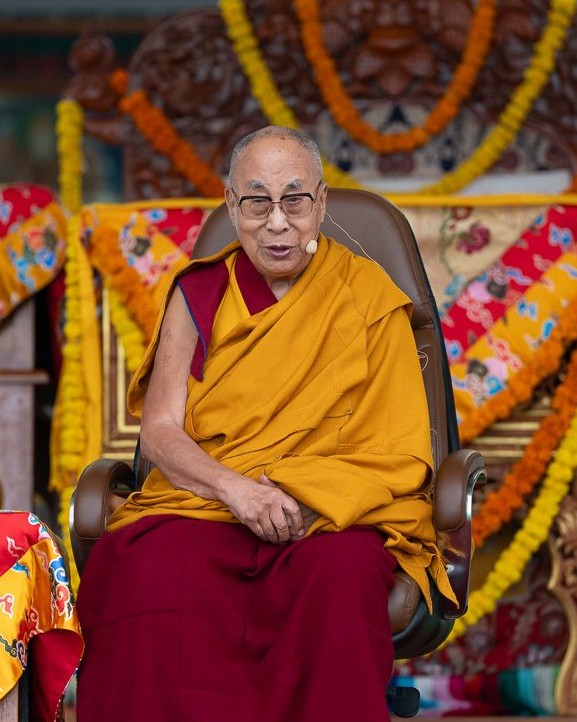
His Holiness has also observed that environmental destruction is often more difficult to recognise than armed conflict: ‘If we compare damage to the environment to war and violence, it’s clear that violence has an immediate impact on us. The trouble is that damage to the environment takes place more stealthily, so often we don’t see it until it is too late.’
Calls for nations and young people to act
His Holiness has urged powerful nations to shift their priorities: ‘The big nations should pay more attention to ecology. I hope you see those big nations who spent a lot of money for weapons or war turn their resources to the preservation of the climate.’
On another occasion he remarked: ‘Climate change is not the concern of just one or two nations. It is an issue that affects the whole of humanity and every living being on this earth… When we see photographs of the earth from space, we see no boundaries between us, just this one blue planet. This is no longer a time to think only of ‘my nation’ or ‘our continent’ alone. There is a real need for a greater sense of global responsibility based on a sense of the oneness of humanity.’
His Holiness also called on young people to act: ‘I call on the younger generation — be rebels demanding climate protection and climate justice because it is your future that is at stake.
‘Simply meditating or praying for change is not enough. There has to be action.’
Outer crises have inner causes
His Holiness consistently advises that these outer crises have inner causes: ‘We can find peace in the world only when we find peace within. Every human being has the potential to cultivate inner peace, and by so doing to contribute to the peace of our global community.’
Throughout his life, His Holiness has consistently argued that lasting peace and environmental protection are inseparable from the cultivation of compassion, wisdom and personal responsibility. While governments and international institutions have vital roles to play, he reminds us that meaningful change also begins with each individual.
Read more about His Holiness’ extraordinary life and legacy as an educator. Images of HHDL from the website of the Office of His Holiness the Dalai Lama.

For information about classes and retreats held at our meditation centre in Melbourne VIC, please visit tibetanbuddhistsociety.org